How Haiti Shaped America

Today, Haiti is in a difficult political and economic period. It is helpful to put this in historical perspective. Haiti and the United States have been intertwined throughout our histories. Most Americans are unaware of the importance of the Haitian revolution to the newly founded United States, particularly the South. 

The Haitian revolution was noteworthy in several respects. It is the only successful slave rebellion in history to form a nation. It formed the first modern black-governed nation. Haitians defeated the most powerful European army of its era – the French of Napoleon Bonaparte. And it founded the second independent nation in the Americas – after the United States – in 1804. If you thought that The U.S.A. would welcome another new nation which had thrown off the yoke of its European colonialists, you would be wrong. As a slave-owning nation, the United States responded by refusing to recognize the new Haitian nation, joined European nations by imposing a trade embargo (now known as “sanctions”) and generally tried to repress the new nation. 

In his book How the Word Is Passed: A Reckoning with the History of Slavery Across America, author Clint Smith tells the story of the largest slave rebellion in the United States and the role that the Haitian revolution played. Here is an excerpt.

 On a rainy southern Louisiana evening in January 1811, Charles Deslondes, a mixed-race slave driver, led this massive armed rebellion. Composed of hundreds of people, Deslondes’s army advanced along the serpentine path of southern Louisiana’s River Road to New Orleans with a military discipline that surprised many of their adversaries. It is remarkable to consider that hundreds of enslaved people, who came from different countries, with different native languages and different tribal affiliations, were able to organize themselves as effectively as they did. 

On the German Coast of Louisiana, where the rebellion took place—named as such for the German immigrants who settled there—roughly 60 percent of the total population was enslaved. The fear of armed insurrection had long been in the air. That fear had escalated over the course of the Haitian Revolution, in which the enslaved population in Haiti rose up against the French and in 1804 and founded what became the first Black-led republic in the world. 

The French army was so beleaguered from battle and disease—by the end of the war, more than 80 percent of the soldiers sent to the island had died—that Napoleon Bonaparte, looking to cut his losses and refocus his attention on his military battles in Europe, sold the entire territory of Louisiana to Thomas Jefferson’s negotiators for a paltry fifteen million dollars—about four cents an acre. Without the Haitian Revolution, it is unlikely that Napoleon would have sold a landmass that doubled the size of the then United States, especially as Jefferson had intended to approach the French simply looking to purchase New Orleans in order to have access to the heart of the Mississippi River. For enslaved people throughout the rest of the “New World,” the victory in Haiti—the story of which had spread through plantations across the South, at the edges of cotton fields and the quiet corners of loud kitchens. – served as inspiration of what was possible. 

Even William C. C. Claiborne, the governor of the territory that would become the state of Louisiana in 1812, wanted the territory to stop importing enslaved people from Haiti, fearing that some of them might have taken part in the Haitian Revolution. In 1804, Claiborne wrote a letter to then secretary of state James Madison, sharing his concern: “At present I am well assured, there is nothing to fear either from the Mulatto or negro population,” he said, beginning by attempting to assuage any immediate fears the president and his cabinet may have had, “but at some future period, this quarter of the Union will (I fear) experience in some degree, the misfortunes of St. Domingo [Haiti], and that period will be hastened, if the people should be indulged by Congress with a continuance of the African-trade.” Claiborne said that he would attempt “to prevent the bringing in, of slaves that have been concerned in the insurrection of St. Domingo. ”According to historian David Brion Davis, “For nearly seventy years the image of Haiti hung over the South like a black cloud.”

Excerpt From: How the Word Is Passed: A Reckoning with the History of Slavery Across America, Smith, Clint
Beatrice in 2021

Beatrice2021.jpg

Her name is Béatrice Brunet, she has lived with her Aunt since the death of her mother in the earthquake on January 12, 2010. She lives in village #4 and just completed the 9th grade at the Ecovillage school. She described to us how she worked during the school year to prepare for the state exam: “We started the school year well even though I went a little late due to economic difficulties.  My aunt struggles because she already has 3 other children under her responsibilities.  We have teachers who come to work regularly every day and we have lessons that end around 2 p.m. Sometimes it is difficult for us because we are often very hungry.  There was hardly any food this year but we stayed to take all of our classes. ”

 When asked what she is going to do during these Holidays or what she would like to do she replied: “I have no plans for the summer, I do not know what my Aunt will give me as responsibility.  But if I had the possibility of going in training camps for young people, I could take advantage to recreate myself and also learn.  I would like to learn to sew, learn to use computers ... "

 We asked her "If you pass the grade 9 exams, which school would you like to go to continue with your classical studies?"  “I don’t know. College tempts me but I certainly won't be able to afford college. I will probably go to high school in Colladere or Hinche.”

 When we asked what she would like us to do to improve in school, she replied "I hope we can paint the school, build a computer room like I saw in a school in Hinche."

 Thank you very much for your support and your prayers.  The school was able to continue all of these programs despite this difficult year.  It is because nothing can stop our God!  Thank you for continuing to support my country through education.

- article contributed by Carlos Sinfinice (6/27/2021)

 Though the mountains may be removed and the hills may be shaken, My loving devotion will not depart from you, and My covenant of peace will not be broken," says the LORD, who has compassion on you. Isaiah 54:10

The Pandora Papers and The EcoVillage School

The future for these children is jeopardized by people who steal from Haiti’s wealth.

The future for these children is jeopardized by people who steal from Haiti’s wealth.

A Haitian-Atlantan member of the Atlanta EcoVillage School Partnership steering committee gets upset when we say that Haiti is the poorest country in the Western Hemisphere. He says “We are not the poorest. We have great wealth and natural resources.” How can this be true when all the statistics show that Haiti has the highest percentage of its people who are impoverished, illiterate and hungry? The Pandora Papers show how both these seemingly contradictory realities can be true.

To get the full story we refer you to this front page story in the Miami Herald:  “Pandora Papers: A mega wealthy man from the region’s poorest country — and his Miami palace”   A caution: it will make you angry or disheartened.

The Bigio’s are one of a handful of families that control Haiti’s business and wealth, traced back to the days when dictators gave them export/import monopolies in exchange for bribes. They extract wealth from Haiti and hide it in shell companies that invest in rich countries. Many rarely step foot in Haiti any more. Nicknamed MREs (Morally Repugnant Elite), they use their wealth to control the government and maintain their monopoly positions. Many Haitians believe that funding for the recent assassination of President Moise by Colombian mercenaries can be traced to his efforts to break up the electricity monopoly. Even though Moise was a beneficiary of the system – he was known as “Banana Man” – his disruptive efforts were viewed by the MREs as a threat to the system from which they have benefited so greatly.

How does all of this relate to us?

When we began the school project, we were asked by several donors why the costs of construction materials, such as concrete and rebar, were so high. The Bigio family controls the importation of those commodities. They took their slice of our contributions when we bought those materials to build the school.

Our original goal was to build a financially self-sufficient school. The path to local funding was to qualify as a national school, which the Haitian Constitution requires the government to fund. In our 5th year the school received certification and all of our teachers are nationally certified as well, which qualifies the school for government support. We achieved our side of the bargain within our 5-year window.

But the government has no funds to pay teacher salaries, which is the way the Haitian system is supposed to support its national schools. Why doesn’t the government have those funds to educate its children? MREs evade taxes with international banking mechanisms that are too sophisticated for the Haitian government to figure out. Half of Haitian kids never learn to read because the money for their schools is stolen by MREs. Morally Repugnant Elite, indeed. Since they are by far the most powerful entity in the country a weak, corrupt and incompetent government is in their interest.

The MREs could do so much for their country. They have the business skills, connections and resources to build up Haiti’s economy, to begin with creating an educated workforce. They could be the vital ingredient for a resurgent nation. They, too, participate in a bigger system in which their wealth is not unusual. Many poor countries around the world suffer similar dysfunctional systems. The Pandora Papers reveal the tip of an international iceberg of which Haiti is simply one of many. Solutions will take international cooperation and generations to fix. 

What are we supporters of a small school in rural Haiti to do? We know that we cannot fix Haiti or the international system in which it is trapped. The Atlanta EcoVillage School Partnership grappled with these very issues during a series of meetings this year to chart our future. We midwifed this school. We decided to work to keep it open for the 2021-2022 school year. Because of your support, we were able to fund the first semester which began in September and we will ask you to fund the winter semester, too. Fixing an inequitable international system is beyond our power. Providing opportunity for 280 country children seems to be within our grasp. That is what we will try to do. Thank you for joining us in that effort.


Survivor of 2010 Earthquake Provides Earthquake Relief Aid in 2021

Carlos arrives in earthquake disaster area to begin relief efforts.

Carlos arrives in earthquake disaster area to begin relief efforts.

A Haitian medical team from Hinche flew to Southern Haiti on August 15th only one day after a devastating 7.2 magnitude earthquake struck centered around Les Cayes. Our friend, Carlos Sinfinice, was a member of this first response team. He is the oldest child of a family that lives in the Ecovillages in the Central Plateau of Haiti and has just graduated from medical school in April, 2021.

The university that sponsored the team was able to send them by air bypassing the gang-controlled area around Port au Prince. On day one, they started treating the injured and providing supplies to those in need. They then made their way to the Saint-Antoine de Jérémie Hospital which is located in an area only slightly impacted by the earthquake. From this functioning facility, they provided adequate care for the people.

Many of the survivors of this year’s earthquake lost all their material possessions and were living in the streets with no food or water. The aid the team offered was very welcomed. On the third day of their relief efforts, the area was struck by a hurricane which only added to the stress of the situation. As the storm cleared, the team continued their work of distributing food kits and providing necessary medical care.

Visit the photo gallery to see the team in action.

In a quieter moment, Carlos pauses to reflect on his many blessings. He writes, “Have you ever asked God why He loves you, why He protects you, why He does all these miracles in your life, when you don't feel different from the others yet you have the impression that He  chose you and that you have a great destiny.

This is how I feel.  I come from a poor family and here I am a doctor.  I was in Port-au-Prince during the earthquake of January 12, 2010. I was there. I almost fell victim.  I spent 2 months sleeping in the streets of Port-au-Prince not knowing whether I was going to eat or not.  And here it is, I am helping the earthquake victims.

One day when I was in the first year of faculty I missed 3 days of class because my only shoes were torn. And here today. I have about 4 or 5 pairs of shoes, and a car that is on the way.

 Why has God given so much. I am nothing but a sinner like the others.  But is it true how am I different?”

We are glad to know that Carlos and his friends are back in Hinche now. They are safe and fulfilled knowing that they were able to help some people. But they also know that the hard part is rebuilding the area impacted by the earthquake. This is a long process. Some of the people impacted by this year’s quake had not fully recovered from the impact of Hurricane Matthew in 2016.

This is not the first article we have written about Carlos and likely will not be the last. He is a remarkable young man. He is blessed by God and by our support of his journey.

Our mission isn’t to simply provide emergency relief and help with recovery. We are working to help Haitians build a better tomorrow.

Follow this link to view a gallery of photos Carlos was able to send during their relief efforts.

Team of doctors from Hinche among the first to reach victims of recent earthquake in Southern Haiti.

Team of doctors from Hinche among the first to reach victims of recent earthquake in Southern Haiti.

Good times with great supporters!

IMG_2413.jpg

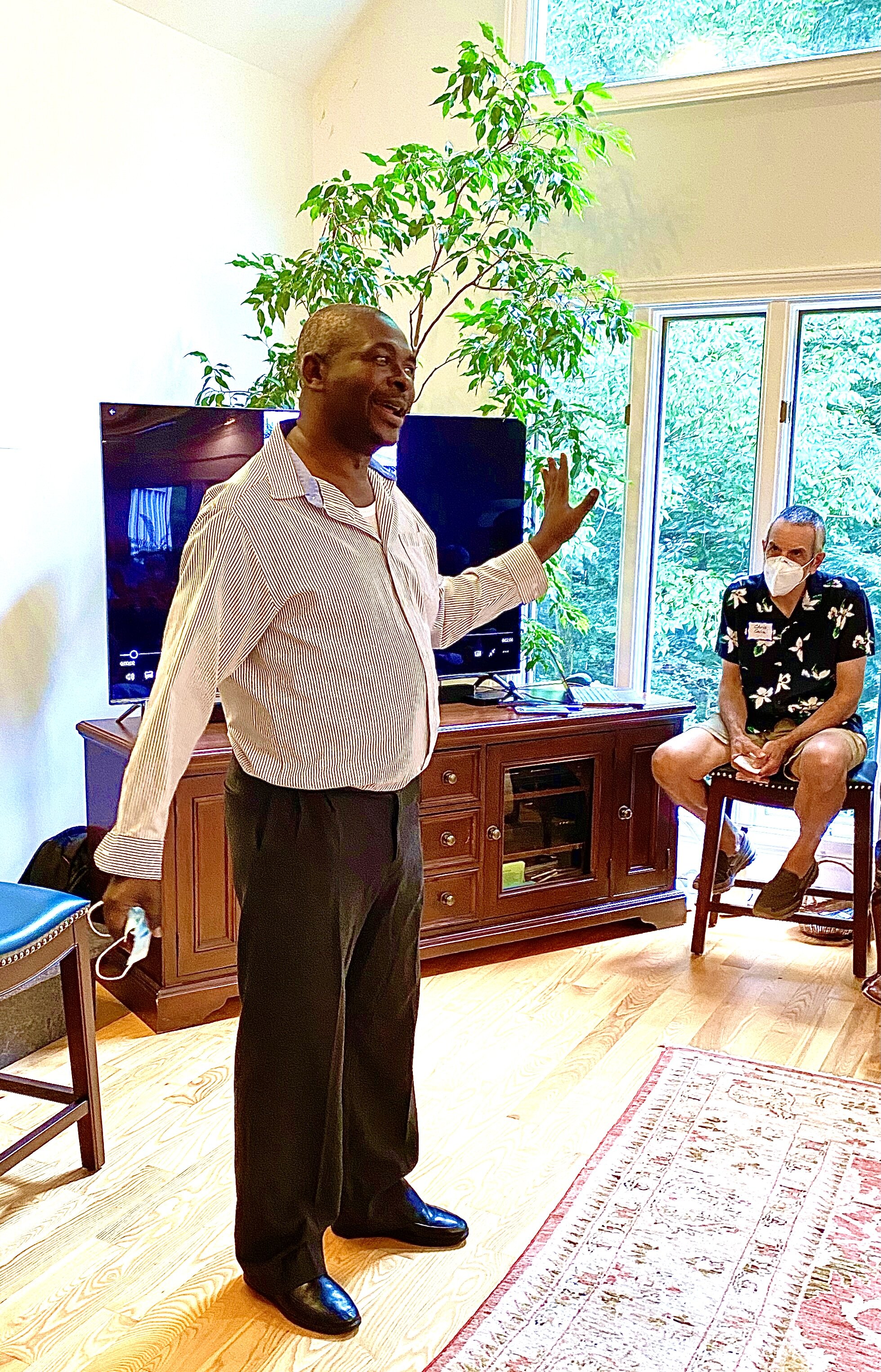
The Reception for Heguel was a huge success! Over 45 friends of the School gathered to meet Heguel and to renew friendships. We celebrated, listened, asked, listened more and heard updates from the EcoVillages and the School. (Click here to see more photos.)

The Haiti EcoVillage School Partnership is grateful to our compassionate, committed friends and donors who continue to give the children a chance. Thank you! Mesi!

So, How are Families in the EcoVillages Doing?

If you follow the news at all, you know that the President of Haiti, Jovenel Moise, was assassinated at his home on July 7th.   You may also know that 4 days prior to the assassination, Haiti was struck by Hurricane Elsa.  These events happened while the country was struggling with political crisis, economic hardships and the coronavirus pandemic.  My friends who know that I follow events in Haiti very closely have said "Boy, they just can't catch a break.  Can they?"

It is true that political upheaval, bad weather events and economic hardship have been the story of Haiti for many years. It does seem like things have gotten a lot worse.  For me, this is personal because I have friends in Haiti.  Here in Atlanta, I have friends that have family in Haiti.  So, while the seemingly insurmountable problems in Haiti are real, my concern lies with how our friends are impacted by all that is happening.

It is too dangerous to travel to Haiti right now.  In fact, our friends tell us that it's too dangerous to travel in Haiti in many areas.   Gang violence is on the rise.  Kidnappings and murders are happening with little consequence to the perpetrators.  

We are still able to communicate to our friends in Haiti via email and text messages. We have made friends with some of the people we have met in the EcoVillages, and they can now provide first-hand testimony to the conditions in the villages. (Their photos are above.)

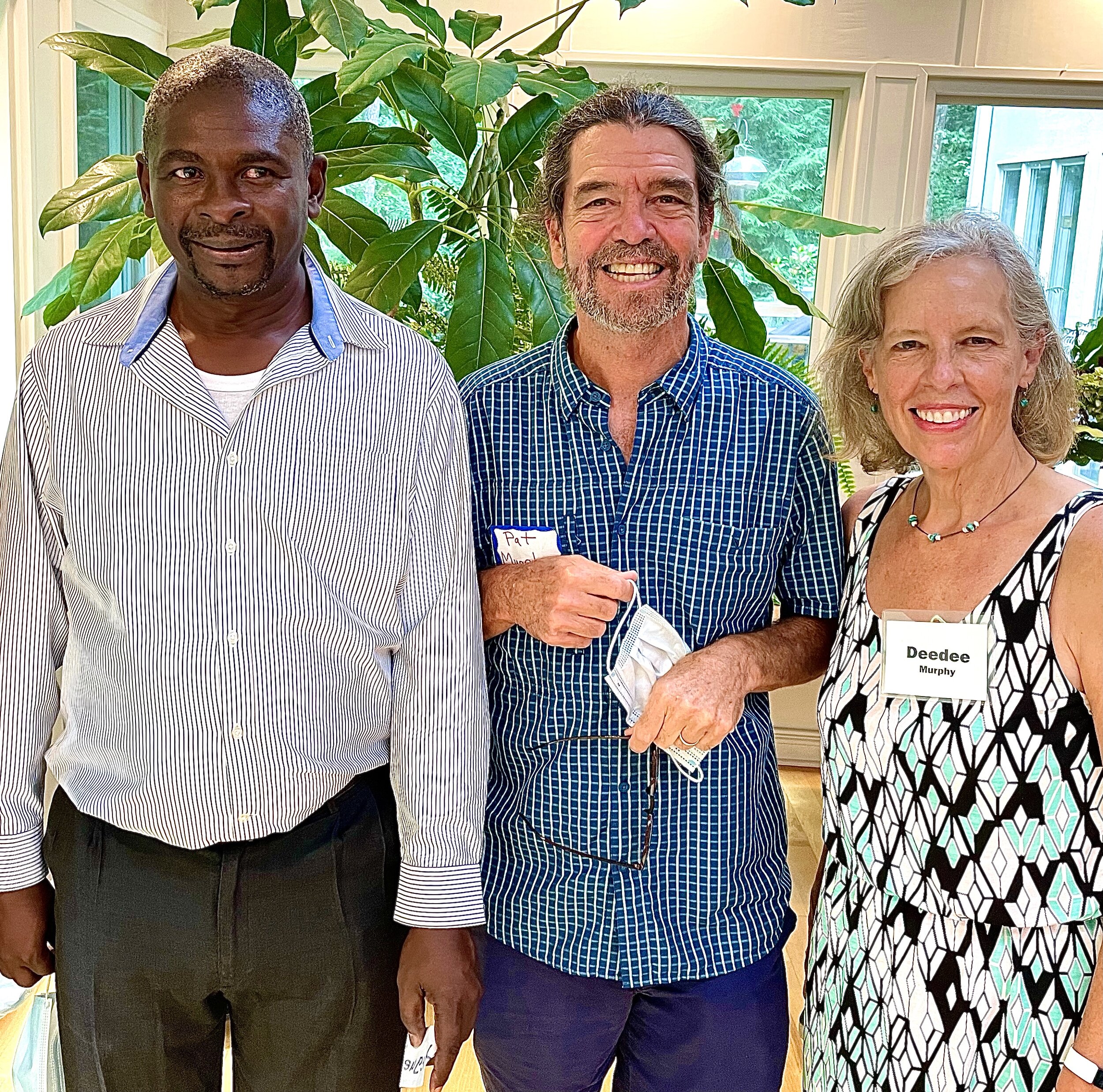
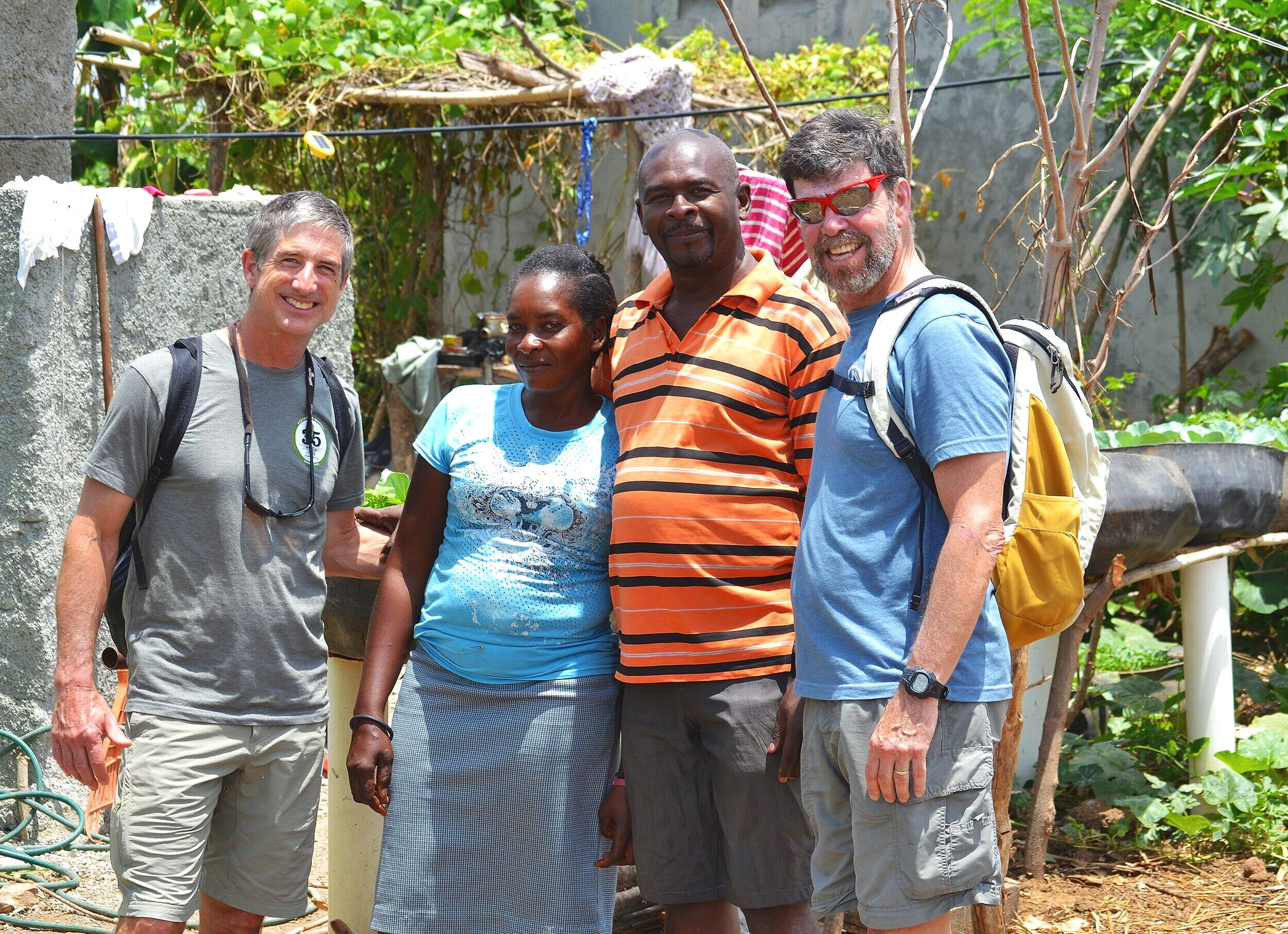
Heguel (pictured above with Pat Murphy & David Evans) lives in village 6.  He says, "Every day I speak to the people from EcoVillages where I live. Everything is going well in the countryside, most of the problems are in Port au Prince."

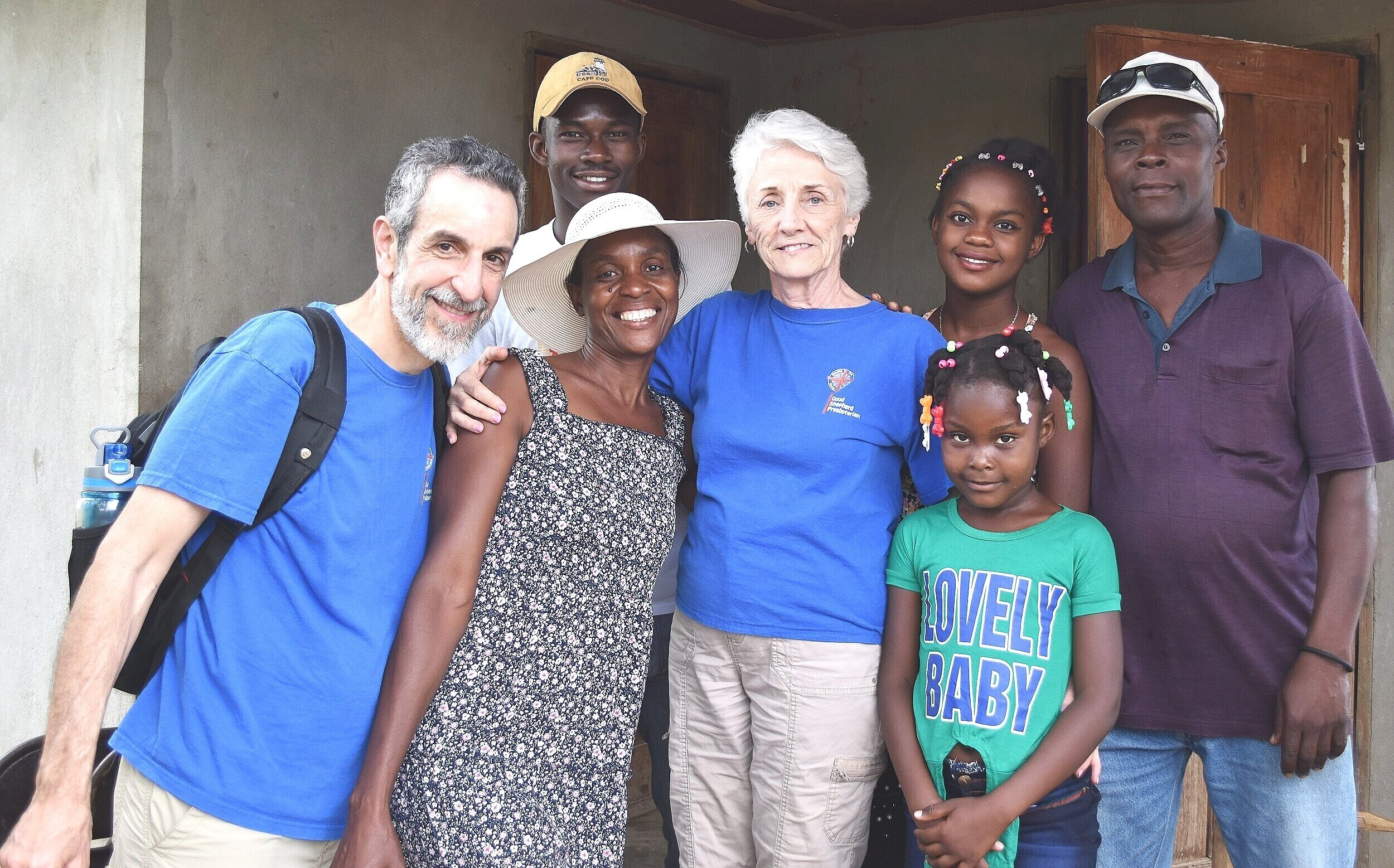
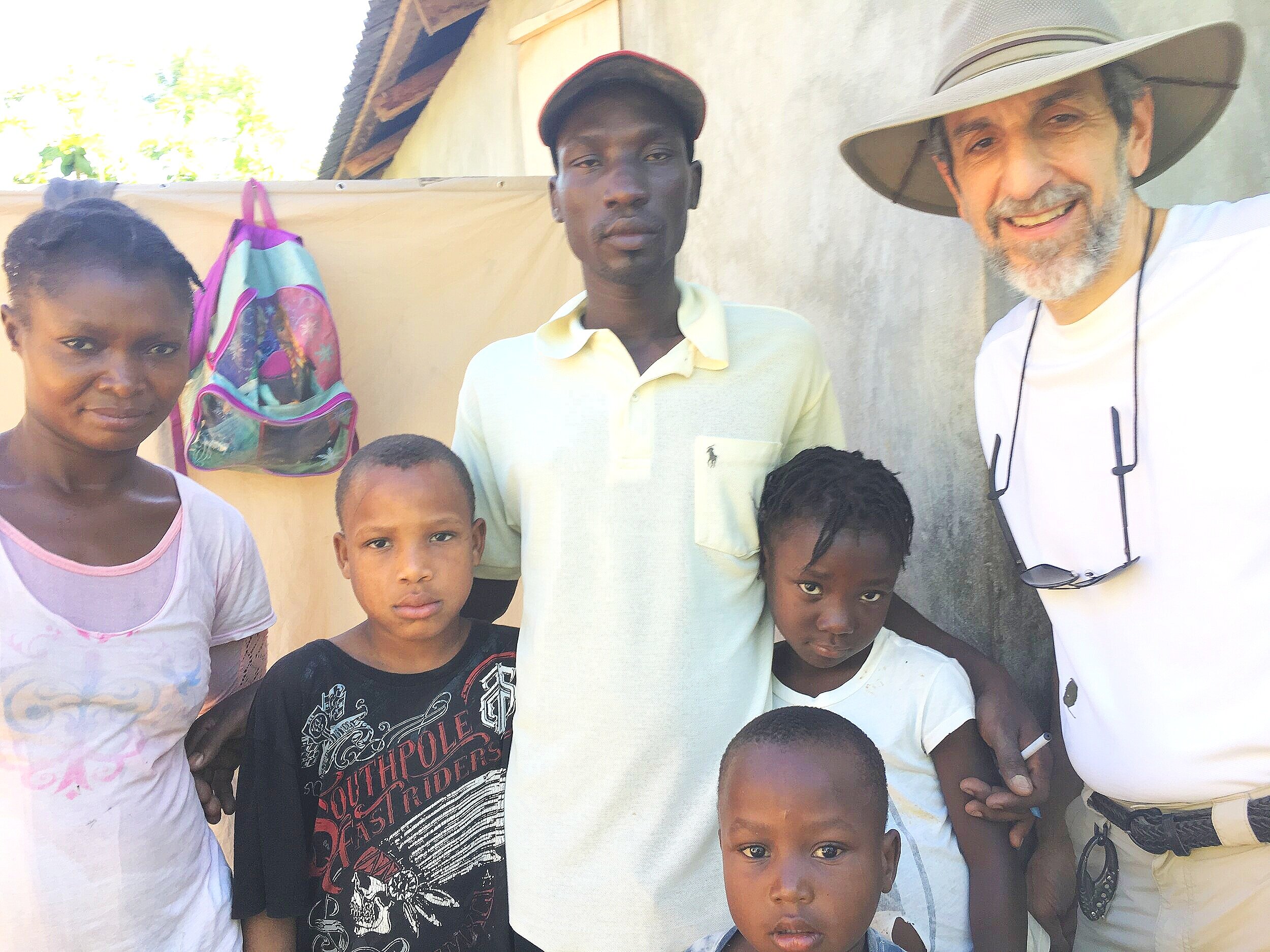
Carlos (pictured with his family, Jeanine, and myself) is a doctor living in Hinche.  His family lives in village 4.  He describes the situation as "the country is still in a very volatile calm".  He goes on to say "… everyone remains vigilant about not knowing what will happen."

Donald (pictured with his family and me in 2017) describes his attitude this way: "For things that concern politics in Haiti, this causes a lot of difficulty but despite everything I put everything in the hands of our savior Jesus Christ".

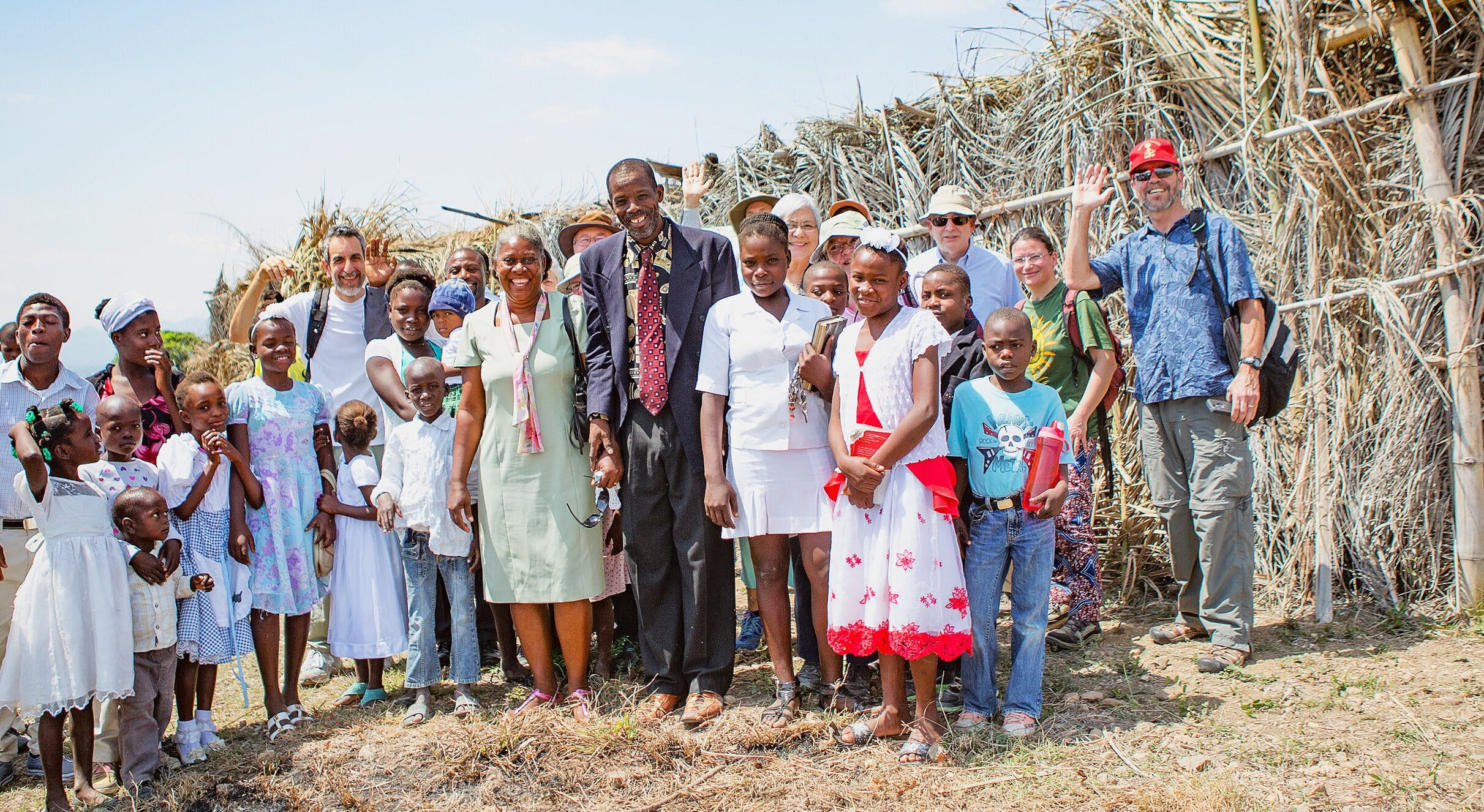
Germeil (pictured with his wife, his church and our mission group in 2017) is a pastor with whom we worshiped together on Easter Sunday.  He says "We are doing well and the gardens are going well with the grace of God. We hold the brethren of Atlanta firmly in memory of our prayers and thoughts."

The silver lining is that the people still have homes in the EcoVillages.  The rains have been plentiful so they should have a good year in their gardens.   These past 2 years have presented many setbacks, but life goes on in the villages.

The school is out for summer and will be in session this Fall.  With the strong, continued support of our donors and oversight by MPP, the children will learn and teachers will be paid.

If you want to hear first-hand testimony from a villager, you are in luck!  One of the villagers will be coming to Atlanta and you can meet him on August 1st.  Click here to see that invitation.

COVID and the Big Test at the Ecovillage School

3students.jpg

COVID is peaking in Haiti and it is adding grief and loss to this country. And we just learned from a villager that our school in the EcoVIllage (along with all schools in Haiti) has been closed by the Ministry. We don’t know how long this will continue or how it will impact our class taking their exams.

This is an important year in the life of the School in the EcoVillages of Haiti.  For the first time ever, since opening eight years ago, our EcoVillage School has a ninth grade class! Like many countries around the world, Haiti issues a test at the end of the school year to determine if a child is able to attend high school.

The test is called the "9th AF Exam" and will be issued in July 12-14, 2021. There will be 15 children from the EcoVillage school taking the test. Four of those children have attended our school each of the 8 years it has been open.  We have profiled some of these children before and you can read their stories here:

 A Boy with a Future

 Meet Beatrice

 Haitian Students Love Math

  Please give generously to the Haiti Mission and "Give a Child a Chance"

The Uncertain Future of Travel to Haiti

Our group meets with the Principal of the Ecovillage school in April, 2019

Our group meets with the Principal of the Ecovillage school in April, 2019

Our Mission has sent more than 50 different people to the Ecovillages of Haiti over the past 8 years. The experience changes your perspective but not in the ways you might think.

You might expect that the poverty would be depressing. You might think that it would make you more grateful for the relative affluence and comfort in your own life. While there may be some of that, it's the personal connection to the people you travel with and the people you meet along the way that makes the largest impact. The difficulty of getting from place to place, the stay in stark accommodations and the language barrier make each day challenging. These hardships create an unshakable bond with your travel mates.  There is also a connection with the people of Haiti. An understanding that they are people like us who are just trying to get by from day to day. They work to support their families. They want better lives for their children. They worship the true God each Sunday. They are different from us only in their circumstances which, in large part, are not under their control.

I yearn for another trip to Haiti. I want to visit the people that I have met and have come to know. I want to see the children at the school and assess their progress. There's a desire to "check in" to see what has changed and what has not changed.

We had planned a trip in March of 2020 but the pandemic forced us to postpone our plans. Today, there is civil unrest, political upheaval and economic hardship worse than the country has experienced for more than a decade. The desperation of the times and civil disorder in Haiti has resulted in a dramatic increase in criminal activity. While we would like to see our friends in Haiti, our hosts cannot guarantee our physical safety while traveling in the country. It is likely that this situation will not change until a new government can be formed in 2022 and there is no assurance that things will be better then either.

It is hard writing these words. Putting words to this situation forces us to confront the reality.  Many have little hope for improvement in Haiti. But we can still make a huge difference in the lives of people we know by staying engaged. The children get a chance to learn because we stay engaged. We need each other.

Please continue to pray for the people of Haiti and give generously to support our mission.

A Chance for a Better Future for Each Child

DSC_1126 (2).JPG

Our mission in Haiti is a bold act in several ways.  We did not build a school. They did. We do not operate the school. They do. We provided the resources necessary to build the school and will continue to provide support until the school can sustain itself without our assistance.

It's a bold and unique plan.  Over 80% of school children in Haiti attend private school mostly run by foreign-based agencies. Our school is a public school, designed, built and operated by Haitian people. It received certification from the Ministry of Education in 2018 after proving the quality of instruction and organization.

Without the school, this fledgling community in the rural, central plateau would not be able to provide education for their children.  Without an education, these children would have no chance to escape the cycle of poverty that has plagued this small nation for decades.  Our school gives these children a chance and hope for a better future.

Matthew 25:31–46 calls us to actively engage in the world around us.  In response, the PCUSA encourages us to "act boldly and compassionately to serve people who are hungry, oppressed, imprisoned or poor".

Please continue to give these children a chance. Donate here.

Celebrating Textbooks

9BA9EC04-CF0F-4E41-9B02-EBF10CA08C8F_1_105_c.jpeg

Kids at the EcoVillage School depend on their parents to buy textbooks for school. This is the Haitian way. But the parents of our kids are too poor to buy those texts. Can you imagine how hard it is to learn math and science only by lecture and recitation using chalk and blackboard? Responding to that need, the Finance Council at North Decatur Presbyterian Church authorized a mini-grant. As soon as they learned of the funding, Directeur Ramin ordered the textbooks for 7th, 8th and 9th grade math and science. They have arrived in time to be used this year. This is particularly important as the first class of 9th graders to graduate from the EcoVillage National Fundamental School will take their high school qualifying exams this summer. They will now have texts to help them bone up for the big national exam.

Arrival of the new textbooks was a day of celebration, worthy of a photo to mark the occasion.

Arrival of the new textbooks was a day of celebration, worthy of a photo to mark the occasion.

Here’s what 7th, 8th, 9th grade textbooks look like in Haiti. Imagine how much more they will be able to learn.

Here’s what 7th, 8th, 9th grade textbooks look like in Haiti. Imagine how much more they will be able to learn.

Magdaline

Magdaline+2020-09-25+140358.jpg

When we sat down with Magdaline Desamour in April 2019, I was struck by the poise of the teenage girl who is a student at the EcoVillage School.   The cheerful, well-groomed 16 year old was glad to talk to us about the school that she loves and has attended since the 3rd grade.  She proudly wears the blue and white checked uniform of the National School System of Haiti.  The cleanliness and pressed appearance of her uniform is remarkable when I consider her 45-minute walk to school along dirt roads from her home in the nearby village of Matbonite.

Magdaline was in the 6th grade in 2019 when we talked with her.  The 4-year delay in her schooling is not unusual in Haiti because access to education is difficult for many children and external factors can sometimes delay opportunity to attend school.  For Magdaline, she missed school during the time when the earthquake of 2010 closed many schools across the country.

She attends the EcoVillage School along with two brothers and one sister out of her eight siblings.   I wonder how such a large family can thrive in these rural parts of Haiti.   But the teenager’s smile belies the difficulties of daily life and exemplifies the resilience of the people we meet when we visit Haiti.

Magdaline told us that she studies Mathematics, French, Social Sciences, Experimental Science and Kreyol.  In the 6th grade, there is one teacher that teaches all the subject areas.   She shares that French is her favorite subject.  This is the official language of schools in Haiti.  As a former French colony until its independence in 1804, French has persisted as the Official language of government, education and the media.

Magdaline and her siblings are among the 70% of students attending the EcoVillage School that live outside the villages.   This is consistent with the vision of Chavannes Jean-Baptiste, the founder of our partner organization MPP who wanted to make sure that a quality education was available to all the people in the area and not just those families transplanted here after the Earthquake of 2010.

We are reassured of the success of the school as Magdaline tells us {via translation} “I love my principal and I love my teacher because they give me a great education.  He teaches us lots of new things.  He gives us knowledge of many things.  My previous school; it wasn’t that great.  But when I started coming here; it is a great experience. “  She continues by telling us “I would love for this school to continue on the path of a great education.” 

We hope that she will pass the National Exam and proceed on to high school.  Opportunity beyond that is uncertain for sure but you get the sense that she knows any opportunity would not be possible without the primary education she is getting now.  That education is only possible because of the school that we helped to build.   A school conceived and operated by Haitians and supported by our many American donors.

contributed by C. Calia
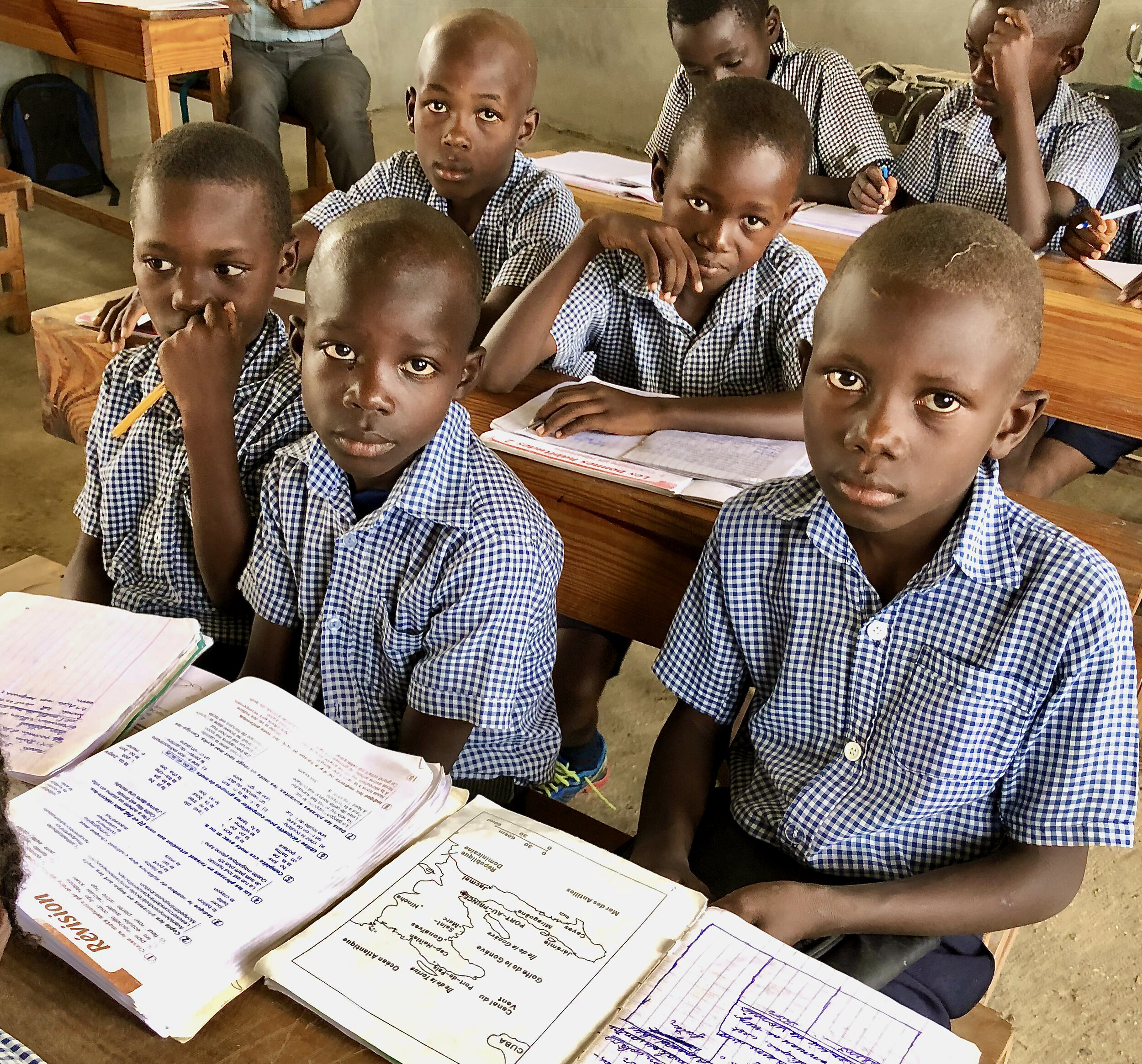
Monseur Wuldriqueand the 6th grade class at the EcoVillage School in 2019.

Monseur Wuldriqueand the 6th grade class at the EcoVillage School in 2019.