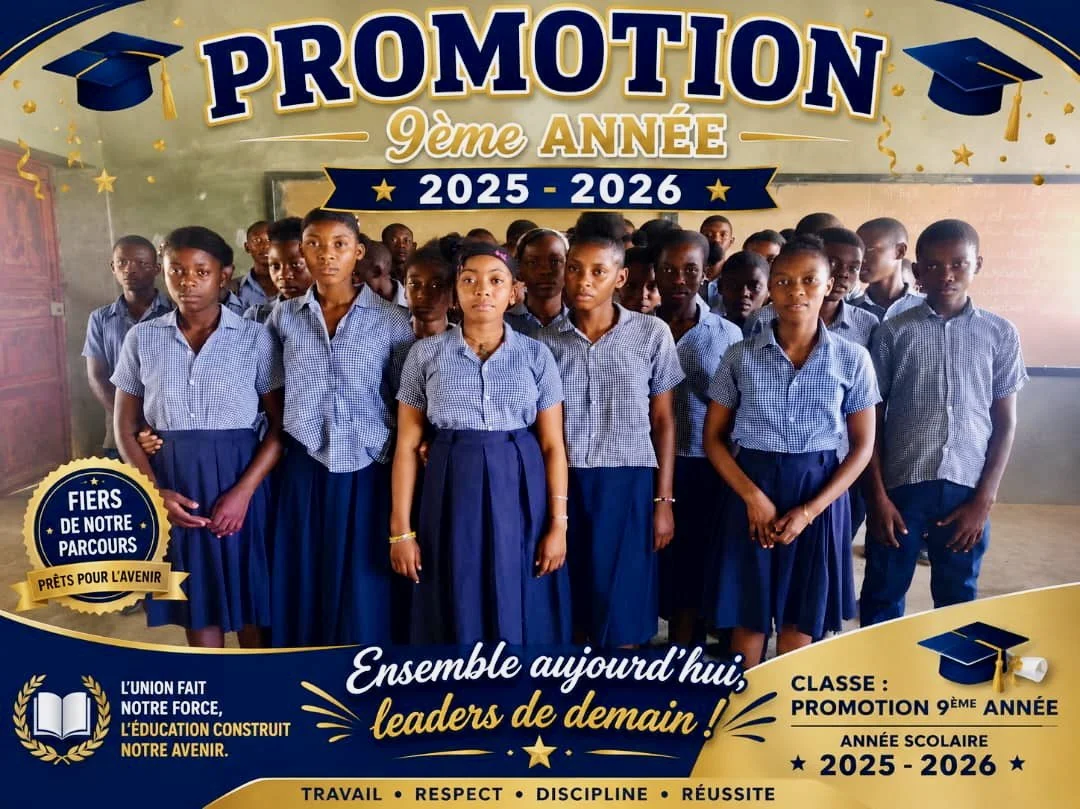
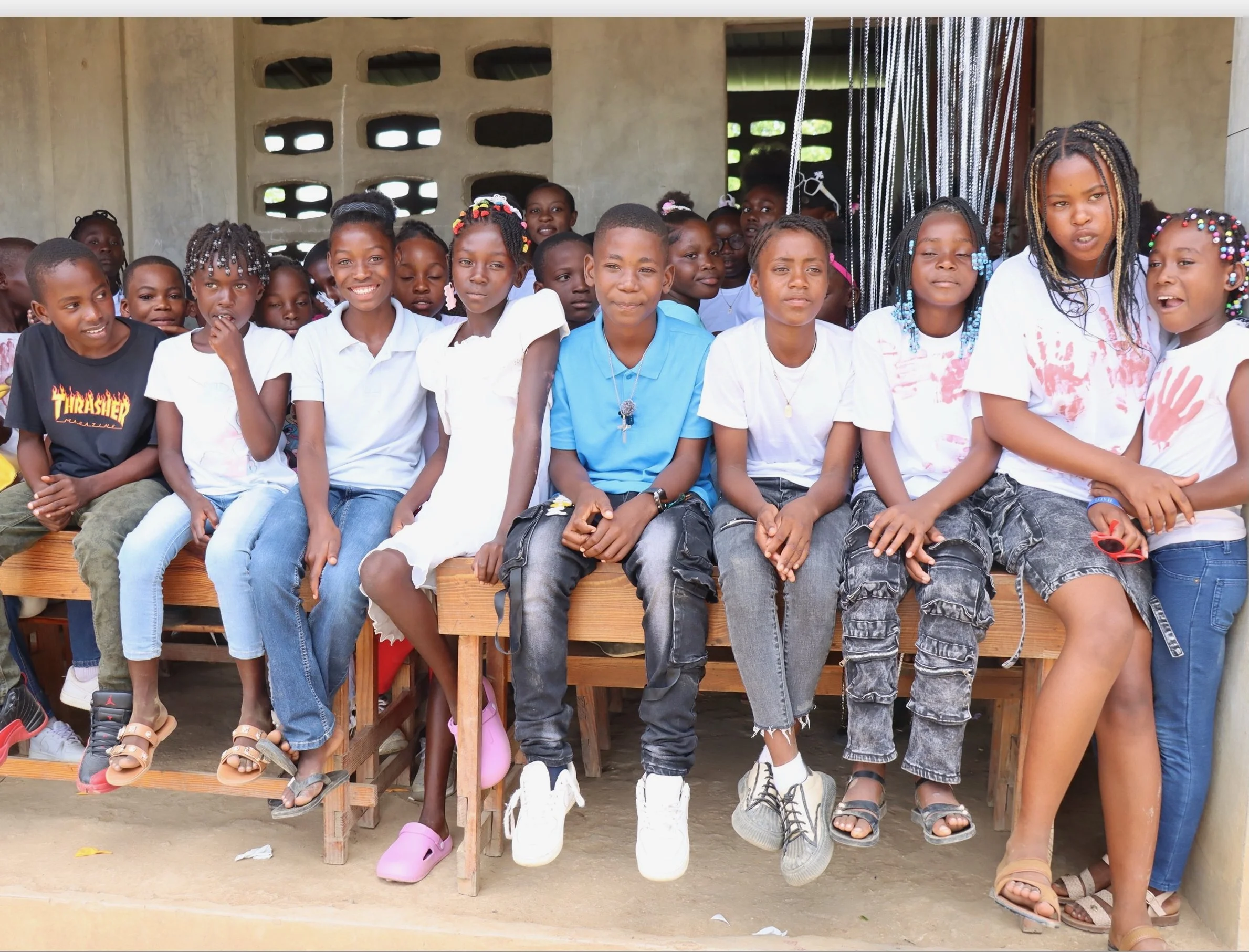
Water Problems at the Haiti EcoVillage School
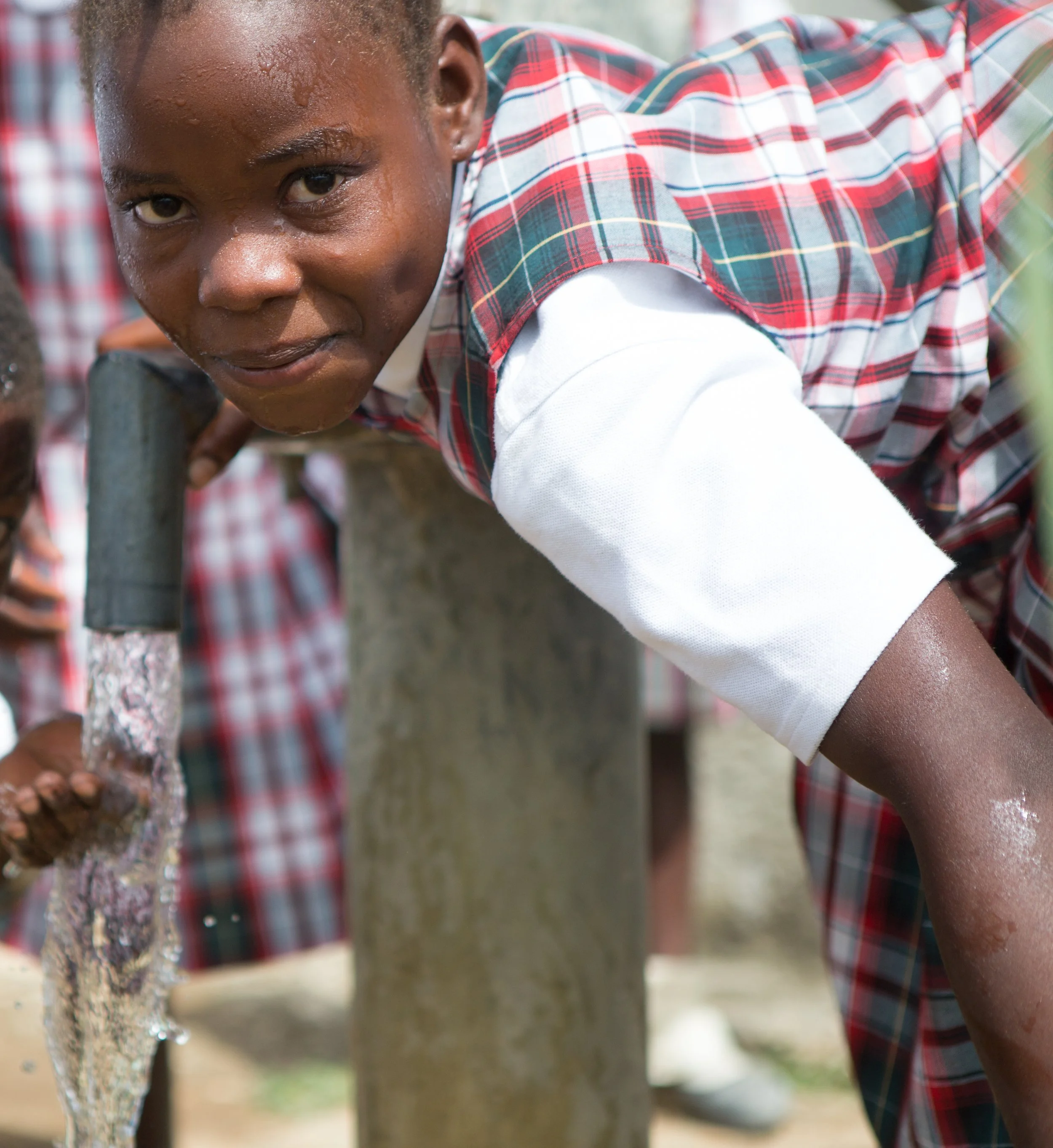
Students have enjoyed free, safe drinking water from the well that was drilled when the school was built in 2014. In the past few weeks, kids started getting sick. The water isn’t safe to drink any more. Principal Ramain began buying water in Hinche, 5 miles away. With over 500 children coming to class every day, a lot of water is needed. This means increased operating costs for the school.
We in Atlanta are collaborating with Principal Ramain and our partners at MPP to find a solution. We will be testing the water, studying the problem and searching for solutions. More updates will be provided when we have consulted with engineers in Atlanta and in Haiti and understand the options. In the meantime, the school is open, safe and bottled water is available.
Henri Survived. What's next?
“…Even if you want to escape, you have to go through thorny paths where you’ll get pricked. You can't escape with anything; if they see you escaping with something, they will kill you or pressure you. When you flee your home and if you want to return, you have to pay the gangs. The situation is really difficult; nothing can function…”
Henri Louvensky knows thorny paths. His life descended into chaos and violence as gangs took control of his once “normal” neighborhood in Port-au-Prince, Haiti. Henri and his family escaped. Their journey was a difficult one. With danger lurking around every corner, they left their home, their lives and the streets that had become war zones. They risked everything to find safety.
“…We left our home without taking anything. We have no money to live. It's our uncle who had some… If not for him, we…would just be sitting, not doing anything.”
Henri’s uncle took them in and enrolled Henry in the 9th grade at the Haiti EcoVillage School. They have found safety living in EcoVillage 3, but the challenges are far from over. “The insecurity really overwhelmed me. The sound of gunfire had a big impact on my ears..”
Henri’s story is a simple yet powerful call for peace and stability. He dreams of a future where children like him can live without fear, where families can stay together, and where schools can provide more than just safety—but also hope, learning, and opportunity.
The EcoVillage School provides a lifeline for children like Henri. Every dollar donated goes to the school: to keep the doors open, to pay the teachers, to buy books and supplies, and to offer these young minds a safe place to grow and learn.
Henri reminds us our support is critical. Join us in our mission to help Henri and others like him find a path forward amid the challenges they face daily. Your generosity makes a lasting impact.
MPP in the News!
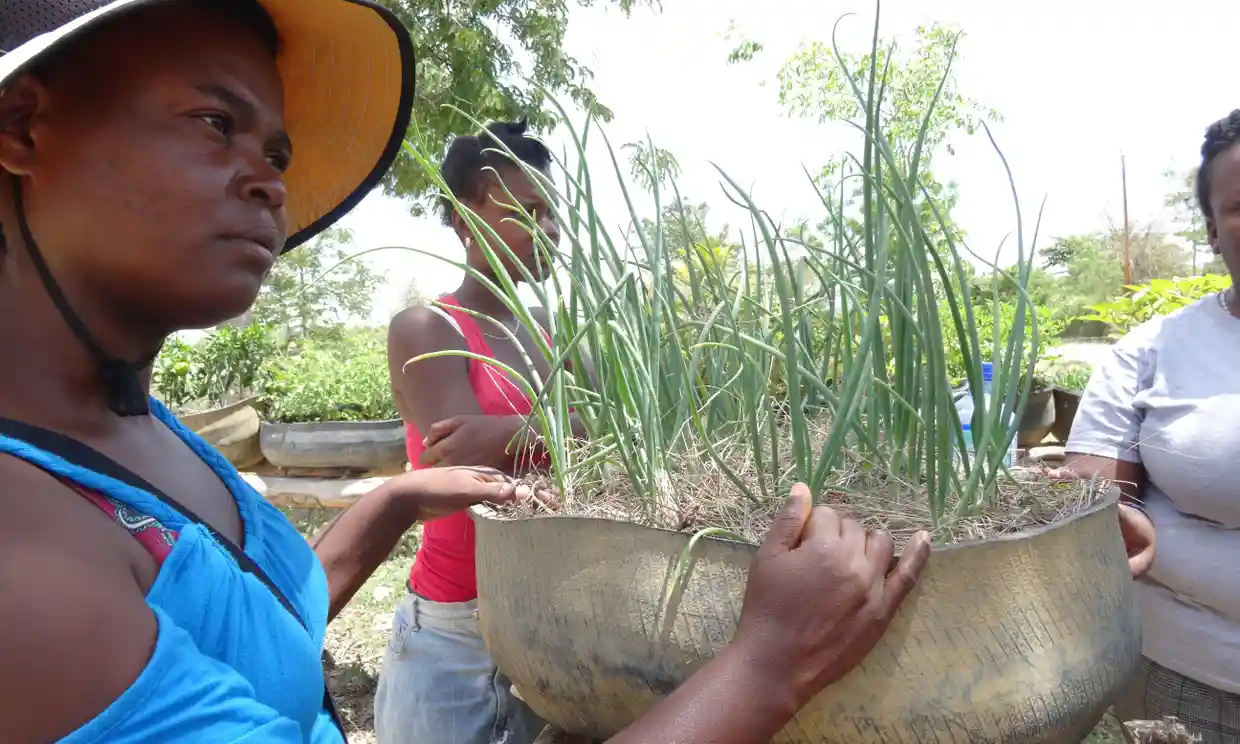
Chavannes Jean-Baptiste, founder of MPP and our partner in the Haiti EcoVillage School, works for food sovereignty for all people.
https://www.theguardian.com/society/2022/jan/08/local-is-better-battered-haiti-looks-to-empower-peasants-to-fight-climate-crisis
Beatrice in 2021

Her name is Béatrice Brunet, she has lived with her Aunt since the death of her mother in the earthquake on January 12, 2010. She lives in village #4 and just completed the 9th grade at the Ecovillage school. She described to us how she worked during the school year to prepare for the state exam: “We started the school year well even though I went a little late due to economic difficulties. My aunt struggles because she already has 3 other children under her responsibilities. We have teachers who come to work regularly every day and we have lessons that end around 2 p.m. Sometimes it is difficult for us because we are often very hungry. There was hardly any food this year but we stayed to take all of our classes. ”
When asked what she is going to do during these Holidays or what she would like to do she replied: “I have no plans for the summer, I do not know what my Aunt will give me as responsibility. But if I had the possibility of going in training camps for young people, I could take advantage to recreate myself and also learn. I would like to learn to sew, learn to use computers ... "
We asked her "If you pass the grade 9 exams, which school would you like to go to continue with your classical studies?" “I don’t know. College tempts me but I certainly won't be able to afford college. I will probably go to high school in Colladere or Hinche.”
When we asked what she would like us to do to improve in school, she replied "I hope we can paint the school, build a computer room like I saw in a school in Hinche."
Thank you very much for your support and your prayers. The school was able to continue all of these programs despite this difficult year. It is because nothing can stop our God! Thank you for continuing to support my country through education.
- article contributed by Carlos Sinfinice (6/27/2021)
Though the mountains may be removed and the hills may be shaken, My loving devotion will not depart from you, and My covenant of peace will not be broken," says the LORD, who has compassion on you. Isaiah 54:10
The Pandora Papers and The EcoVillage School
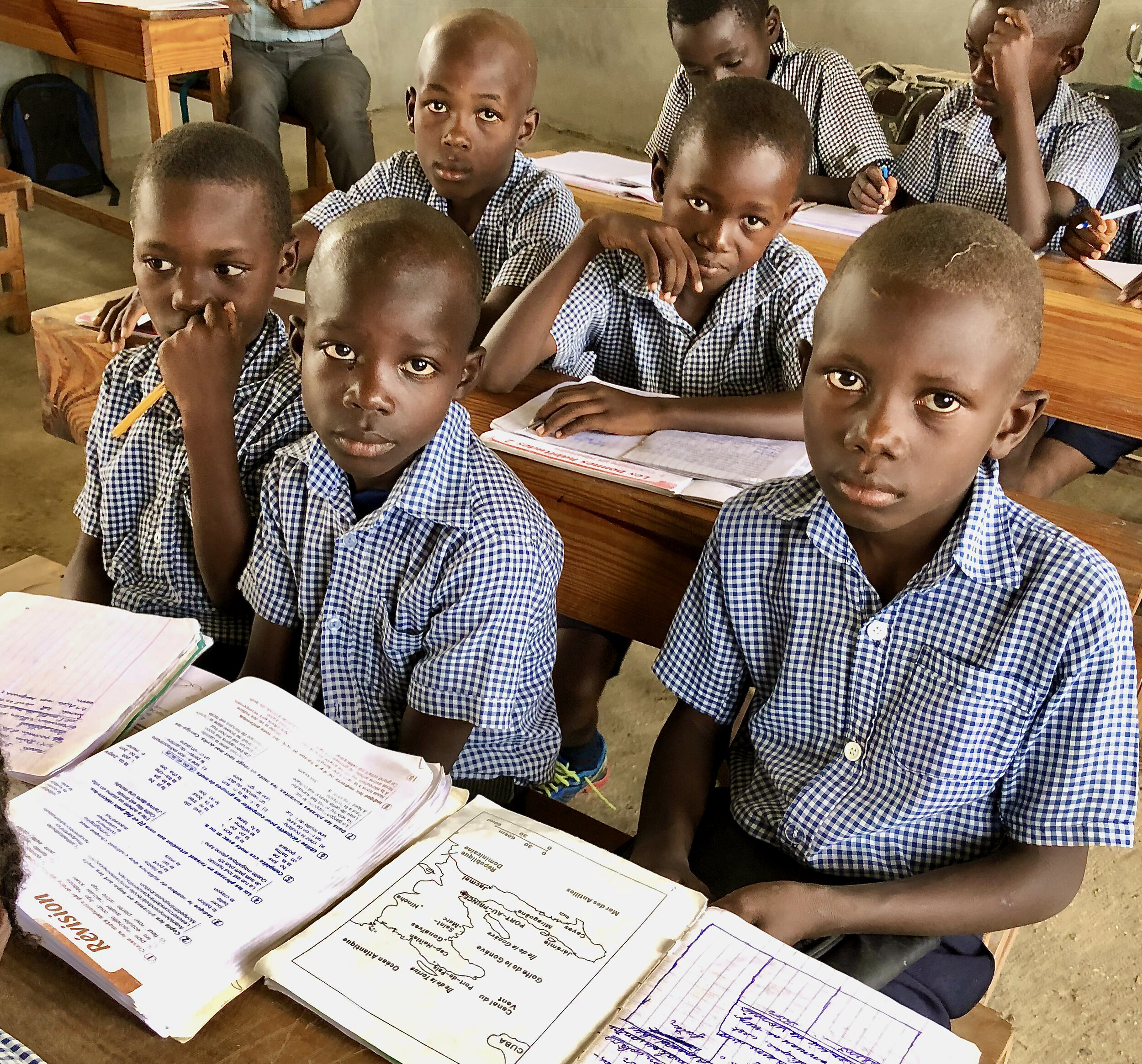
The future for these children is jeopardized by people who steal from Haiti’s wealth.
A Haitian-Atlantan member of the Atlanta EcoVillage School Partnership steering committee gets upset when we say that Haiti is the poorest country in the Western Hemisphere. He says “We are not the poorest. We have great wealth and natural resources.” How can this be true when all the statistics show that Haiti has the highest percentage of its people who are impoverished, illiterate and hungry? The Pandora Papers show how both these seemingly contradictory realities can be true.
To get the full story we refer you to this front page story in the Miami Herald: “Pandora Papers: A mega wealthy man from the region’s poorest country — and his Miami palace” A caution: it will make you angry or disheartened.
The Bigio’s are one of a handful of families that control Haiti’s business and wealth, traced back to the days when dictators gave them export/import monopolies in exchange for bribes. They extract wealth from Haiti and hide it in shell companies that invest in rich countries. Many rarely step foot in Haiti any more. Nicknamed MREs (Morally Repugnant Elite), they use their wealth to control the government and maintain their monopoly positions. Many Haitians believe that funding for the recent assassination of President Moise by Colombian mercenaries can be traced to his efforts to break up the electricity monopoly. Even though Moise was a beneficiary of the system – he was known as “Banana Man” – his disruptive efforts were viewed by the MREs as a threat to the system from which they have benefited so greatly.
How does all of this relate to us?
When we began the school project, we were asked by several donors why the costs of construction materials, such as concrete and rebar, were so high. The Bigio family controls the importation of those commodities. They took their slice of our contributions when we bought those materials to build the school.
Our original goal was to build a financially self-sufficient school. The path to local funding was to qualify as a national school, which the Haitian Constitution requires the government to fund. In our 5th year the school received certification and all of our teachers are nationally certified as well, which qualifies the school for government support. We achieved our side of the bargain within our 5-year window.
But the government has no funds to pay teacher salaries, which is the way the Haitian system is supposed to support its national schools. Why doesn’t the government have those funds to educate its children? MREs evade taxes with international banking mechanisms that are too sophisticated for the Haitian government to figure out. Half of Haitian kids never learn to read because the money for their schools is stolen by MREs. Morally Repugnant Elite, indeed. Since they are by far the most powerful entity in the country a weak, corrupt and incompetent government is in their interest.
The MREs could do so much for their country. They have the business skills, connections and resources to build up Haiti’s economy, to begin with creating an educated workforce. They could be the vital ingredient for a resurgent nation. They, too, participate in a bigger system in which their wealth is not unusual. Many poor countries around the world suffer similar dysfunctional systems. The Pandora Papers reveal the tip of an international iceberg of which Haiti is simply one of many. Solutions will take international cooperation and generations to fix.
What are we supporters of a small school in rural Haiti to do? We know that we cannot fix Haiti or the international system in which it is trapped. The Atlanta EcoVillage School Partnership grappled with these very issues during a series of meetings this year to chart our future. We midwifed this school. We decided to work to keep it open for the 2021-2022 school year. Because of your support, we were able to fund the first semester which began in September and we will ask you to fund the winter semester, too. Fixing an inequitable international system is beyond our power. Providing opportunity for 280 country children seems to be within our grasp. That is what we will try to do. Thank you for joining us in that effort.
A Chance for a Better Future for Each Child

Our mission in Haiti is a bold act in several ways. We did not build a school. They did. We do not operate the school. They do. We provided the resources necessary to build the school and will continue to provide support until the school can sustain itself without our assistance.
It's a bold and unique plan. Over 80% of school children in Haiti attend private school mostly run by foreign-based agencies. Our school is a public school, designed, built and operated by Haitian people. It received certification from the Ministry of Education in 2018 after proving the quality of instruction and organization.
Without the school, this fledgling community in the rural, central plateau would not be able to provide education for their children. Without an education, these children would have no chance to escape the cycle of poverty that has plagued this small nation for decades. Our school gives these children a chance and hope for a better future.
Matthew 25:31–46 calls us to actively engage in the world around us. In response, the PCUSA encourages us to "act boldly and compassionately to serve people who are hungry, oppressed, imprisoned or poor".
Please continue to give these children a chance. Donate here.
Searching for that meaningful (affordable) gift for a special teacher?

Consider making a donation to the Haiti EcoVillage School to honor the teachers in your life today. We will mail you the card for your child to present, or we will mail the card to the teacher you are honoring. Donate here and email the number of cards you need and your instructions for mailing. Thank you for supporting and affirming learning!
Thanksgiving in The EcoVillages

As we gather with our families and friends to express gratitude for our blessings, a different kind of “thanks” giving emanates from the people of the EcoVillages. This Haitian version of gratitude is directed towards YOU.
They are thankful for your gift of learning. You have helped provide the classroom, the workbook, the teacher and the full belly for this child to learn. And 266 other kids like him. When we visited in October, parents and children asked us to deliver this message to you. “Mesi!”
They are thankful for your gift of community. The school has become the center of community life. People collaborate to raise the food that feeds the kids so they can learn. “Mesi.”
They are thankful for the gift of optimism. For people who are rebuilding their lives from the personal devastation of earthquake, from the uncertainty of endless days in tent cities and from the hungry months of drought in their new homes, optimism is an incredible contrast. Make no mistake. It has been and still is hard, requiring enormous resilience just to keep going. They have done the backbreaking work required to scratch a living from fallow soil. They have had to adapt to living among people who were strangers in the beginning. But now they can see the results. The EcoVillages are lush with growing food. Children play with abandon like children are supposed to play. Parents see the possibility of a more prosperous life where there is something left over after the family has eaten. They are optimistic that they will control their own destiny soon and that their own efforts will sustain their school.
They want you to know how they feel about your support: “Mesi. Mesi anpil.”
On this Thanksgiving as you express your gratitude for the ways others have enriched your life, hear the voices of your unseen friends. You have done a good thing. Let their Mesi brighten your holiday.
Insights from my first visit to the EcoVillages of Haiti
U.S. Americans tell me, “Haitians are poor.” Haitians tell me, “we aren’t poor, we are happy.” On this, my first trip to Haiti, I have come to believe the truth is dependent on one’s perspective.
Haiti is a land plagued by hurricanes, earthquakes, floods, tropical storms, and waves of cholera. Records going back to the 1700’s show this, and the inhabitants know more will come. The earthquake of 2010 is probably the worst tragedy most have experienced in their lifetime. The country is still struggling to come back from the severe devastation and loss of life it caused. There is still a lack of infrastructure, paved roads, repaired bridges, unclean drinking water, food shortages, crowding, unsanitary living conditions, health issues, and high unemployment.

For Haitians it doesn’t help to dwell on a past that can’t be changed or fear a future that is unknown, yet will inevitably bring more disasters with it. They focus on living in the present: learning what they can each day, understanding it fully, improving what they can – so the future will be better too.
Getting through hard times is easier if one has support from others. Pooling resources and sharing helps everyone. 60 disparate families that came together after the 2010 earthquake to build a community with the help of an Haitian organization, MPP. First MPP helped them get shelter and food. The next thing the families fought for was a school for their children. With the help of the Atlanta Partnership for the Haiti EcoVillage School and the UUSC, the villages now have a nationally certified school. Every family works in the school garden so the children have food at school.

Now each village is tending goats, growing manioc, goat feed and moringa. They are working together so the village can become self-sustaining and bring in some income from these products. They started learning to sew over a year ago. They make school uniforms for their children and hope to sew them for surrounding schools as well. This is a joint effort of all the EcoVillages. In observing this group I saw them working hard, hours long without a break, yet they laugh and tease one another as well. Small children come to work with their mothers. When the older children come in after school they help take care of their siblings and seem to enjoy playing with them. When I visited the school the children all smiled and laughed and were eager to learn.

The U.S. seems so different. It is an individualistic society where often suburbanites drive into their garage and walk directly into their house without seeing anyone. When we pass someone in the grocery store, we seldom know or greet one another. We have individual goals – a more prestigious position at work, a better car, a bigger house. We work long hours under great stress to “make it” in our jobs. Many people live alone and are lonely. That is not to say we are unhappy, for we are fortunate in many ways.
In contrast in the EcoVillages of Haiti everyone lives together, works together, and struggles together. The individual depends on the community for spiritual and emotional health. One Haitian, who moved to the U.S. and then came back to live again in Haiti, told me stress in Haiti is different. In the U.S. we are under a lot of pressure to succeed and build a career and to have material possessions. In Haiti happiness is independent of the physical. It is based on family and community.
Haitians are proud, proud of their heritage, proud of their culture, and of what they have accomplished. They need and want the help U.S. Americans are giving them but they do not want to be told what to do and how to manage their affairs. They want the relationship to be one of mutual respect.
So, are Haitians happy or poor? Happiness seems indeed to be a matter of perspective. Despite meagre physical infrastructure, money, and comforts Haitians are happy for they have what they value most, community and family. We could all learn something from them. I know I have.
Written by Marty Maxwell
Life Improves in the EcoVillages

Education. Enrollment at the school has grown from 170 last year to 267 this year. A new 7th grade classroom was added.
The thirst for learning is contagious. Parents are now clamoring for adult literacy classes so that they can learn to read and help their kids in school.

Electricity. It doesn’t look like much, but a pole can be a beautiful thing. Our partners at the Unitarian-Universalist Service Committee (UUSC) in Boston approved a grant to bring electricity to the six EcoVillages this year. The power is now on! There is a pole next to the community center building in each village which provides light at night. Residents must buy a meter to bring power to their own homes, which some have already done. Residents are already imagining how their lives might change.
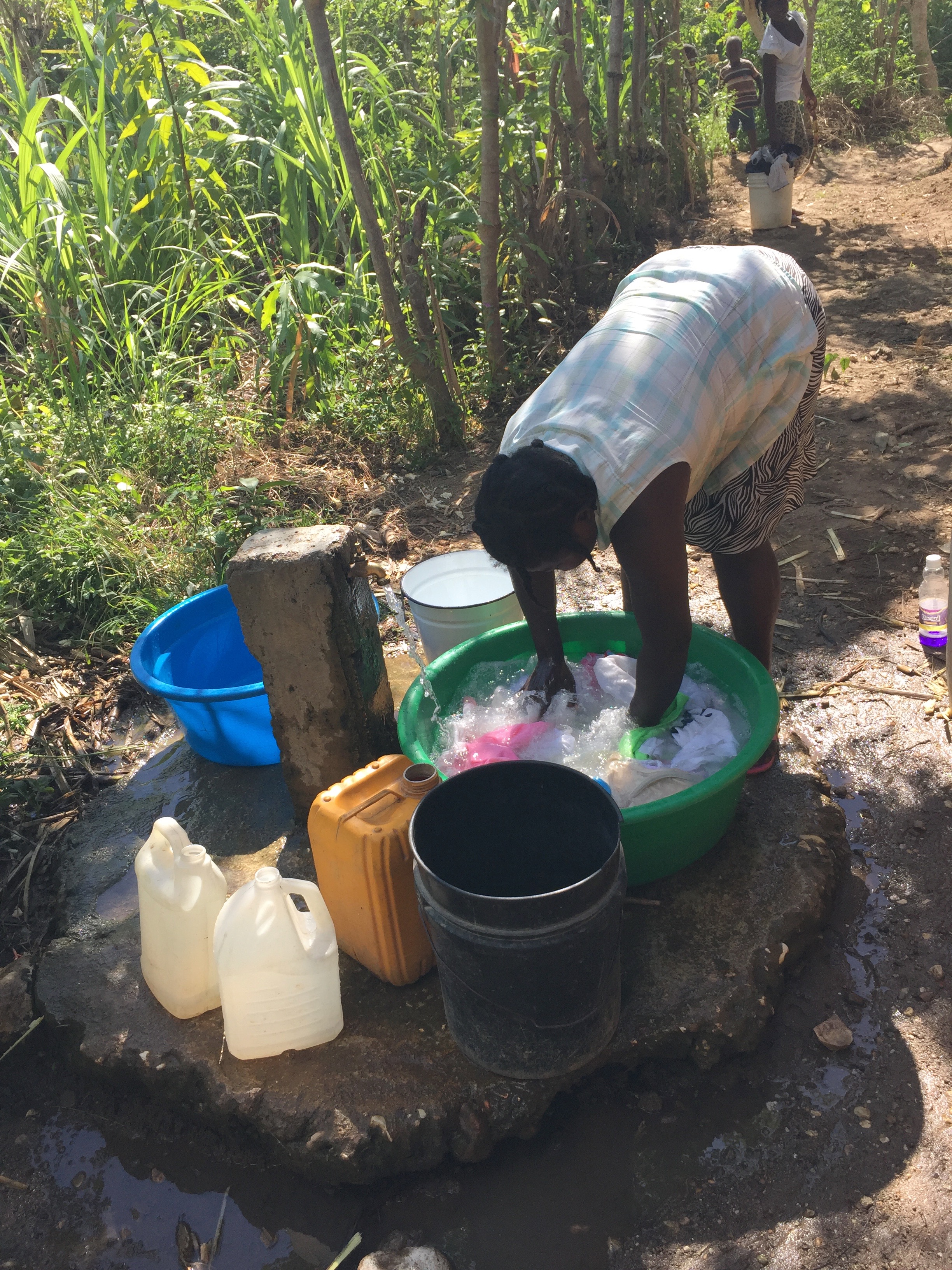
Water. Wells in two of the villages were broken last year. UUSC paid to have them fixed. Now there is nearby water for everyone. Clean clothes feel good.


Food. Everywhere you look there is food: congo beans, cassava, plantains, papaya, bananas, peppers, cabbage, squash. You even hear chickens peck and goats bleat and an occasional pig grunt. The days of empty pots and lean harvests are behind them – at least for now.

Collaboration. Parents understand that they must coordinate their efforts to grow food for school lunches. Thanks in part to a grant from PATH (Atlanta’s Presbyterian Answer to Hunger) new school gardens have been planted, expanding their contribution dramatically. Hot, organic meals are served to the students every day of the week. Cassava came in this month, cabbage next week and squash in November. As a result, the school budget for food has been slashed so that precious funds can be allocated elsewhere.
When asked about his life in the village, one man replied matter-of-factly, “Sometimes it’s good, sometimes not.” In other words, for many life has returned to familiar routines. The struggle for basics -- survival and safety and a place to belong – is being replaced by the struggle to get ahead. You know -- normalcy.
Party Planning
Plans for the 4th Annual Flavors of Haiti are underway! As we prepare for our one fundraising event of the year, we try to consider ways to make the event meaningful, inviting and fun. We want to raise funds, and we want our guests to feel energized and enthusiastic and educated about the impact their support makes.
These critical components of party-planning are also basics in community building. As we have worked to build a school, we have worked to build community in Atlanta with our three-church partnership and to build community with our friends in Haiti. We are excited, enthusiastic and energized! We celebrate the new friendships, relationships, understandings and potential for the future that these years have provided.
We invite you to come to the Party! April 15th, 5:30-7:30pm. Meet the person who founded the EcoVillages. Hear the leader who inspired us to build the school. Learn about the families who have hope because of the communities that support them.